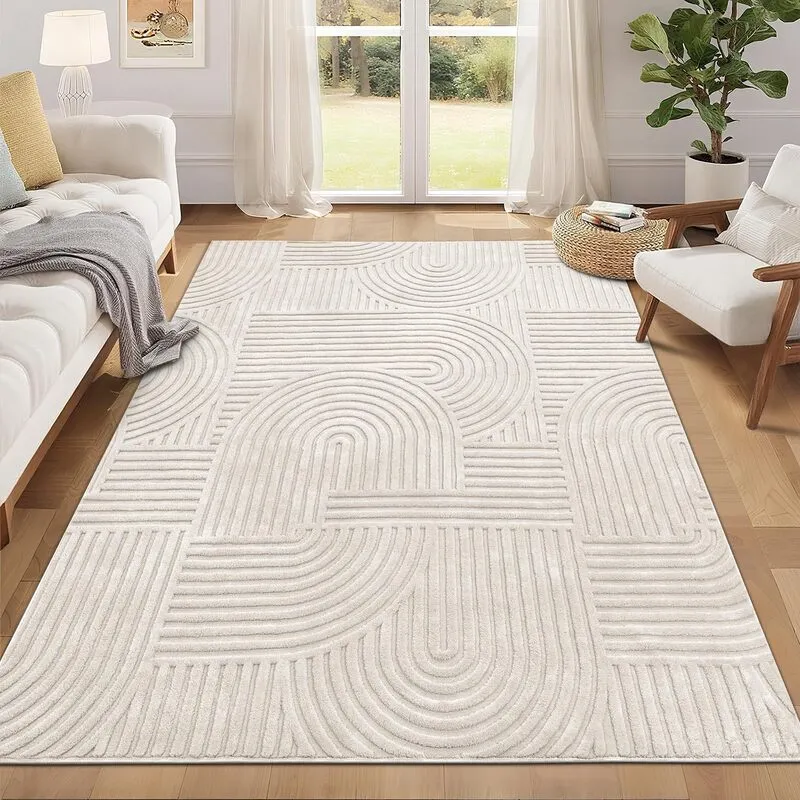
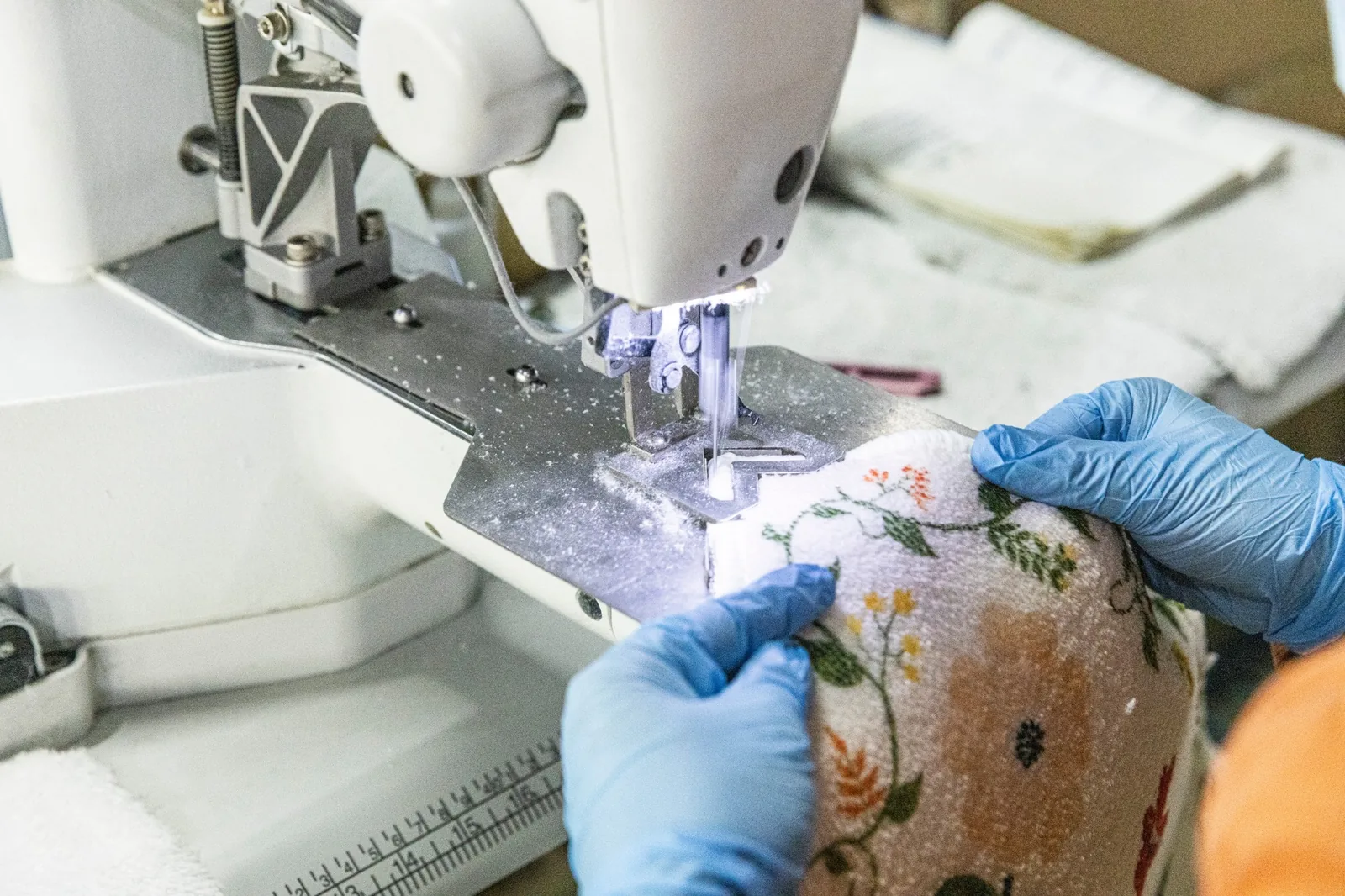
A washable rug should have instructions for the complete product, including the permitted washing and drying method and any size or equipment limits. A washable face fabric is not enough if the backing or edge requires different care.
For a buyer, the next question is whether the selected rug can be maintained as promised. Use an identified sample, record the conditions and compare it after drying. The review below is a practical selection record; formal test claims need the applicable laboratory evidence.
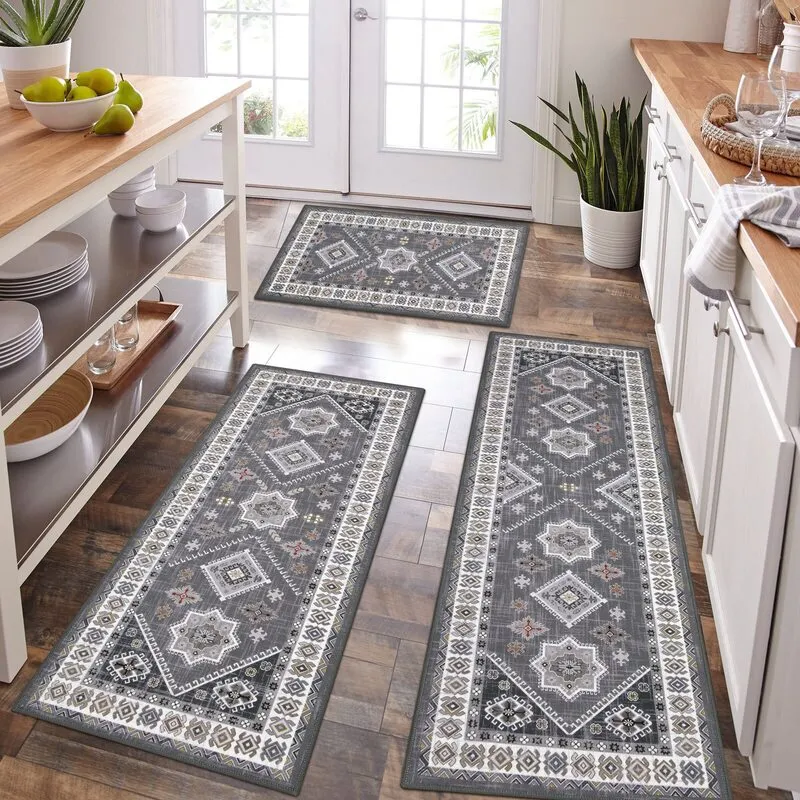
Define exactly what the washable claim includes
Ask whether the claim applies to the whole rug, a removable cover or another defined component. Confirm the approved cleaning and drying method, restrictions, and any size or equipment limits. A label saying “washable” without those conditions leaves the buyer and eventual user guessing.
A small sample and a large finished rug may interact differently with the available equipment. Check the instructions from the rug supplier and appliance manufacturer together. Do not force an oversized item into a machine or infer an allowable load from a general product photograph.
| Question | Record | Warum das wichtig ist |
|---|---|---|
| What is being washed? | Sample ID, size, construction, backing and finished edge | Connects observations to the actual item |
| Which method? | Product-specific washing and drying instructions | Prevents changing several conditions at once |
| Which equipment? | Machine model and applicable load guidance | A swatch does not establish full-size capacity |
| What is acceptable? | Written appearance and dimensional criteria | Pass/fail needs an agreed basis |
| How will the result be used? | Internal selection or a defined external claim | Determines whether independent testing is needed |
Create a starting record that can be repeated
Give each finished sample a unique reference. Photograph the face, reverse, label, corners and edges before care. Note the sample’s dry condition and any existing crease, curl or surface irregularity. Keep the same photo distance, orientation and lighting for later comparisons.
Choose and document the measurement points. Measure both length and width using the same approach before and after care. Record the equipment and measurement resolution instead of reporting more precision than the process supports. If a product has several components, retain a record for each component.
For formal textile testing, ISO 6330 describes domestic washing and drying procedures; ISO 5077 addresses dimensional change after washing and drying. Their existence does not make an informal wash an ISO test. Select the applicable procedure with a qualified laboratory rather than reconstructing it from this checklist. [1] [2]
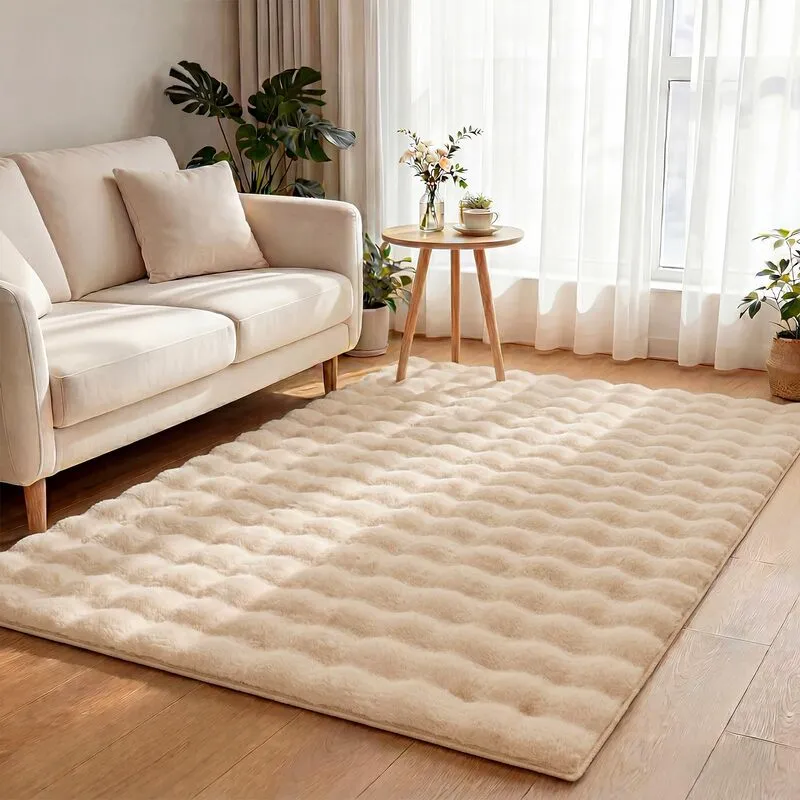
Document conditions, including drying
Follow the written product instructions for the review and retain the relevant details: wash setting, detergent, equipment, loading arrangement and drying method. Record any departure from the proposed instructions. A result from a different method should not be presented as evidence for the stated method without evaluation.
Drying is part of the care process, not an administrative detail. Assess the rug after the agreed drying and conditioning stage, not while it is wet and temporarily distorted. Record when measurements are taken so that a later reviewer can compare like conditions.
If more than one review cycle is agreed, keep a result for each cycle. Do not infer a long service life from one acceptable observation. Repeated review may reveal a trend, but the conclusion still belongs to the identified sample and conditions, not automatically to every color, size or future production batch.
Calculate dimensional change without inventing a pass mark
A simple way to describe change along one measured direction is: (after-care measurement − before-care measurement) ÷ before-care measurement × 100. A negative result describes a decrease in that measurement; a positive result describes an increase. Record length and width separately.
Invented example: a rug is 200.0 cm long before care and 198.0 cm long after the agreed dry assessment, a −1.0% change. Its width changes from 140.0 to 139.3 cm, or −0.5%. These are arithmetic examples, not actual sample results, an ISO tolerance or a recommended acceptance limit.
| Direction | Before care | After care | Change |
|---|---|---|---|
| Length | 200.0 cm | 198.0 cm | −1.0% |
| Width | 140.0 cm | 139.3 cm | −0.5% |
Agree acceptable limits before the review, using the project needs and appropriate technical advice. A rug intended to fit a defined recess or furniture arrangement may need a different decision from a loosely positioned accent rug. Do not select a tolerance after seeing the result simply to make the sample pass.
Review appearance, edges and backing together
Compare the dry sample with its starting record. Look for changes in shape, pattern appearance, surface texture, edge condition and backing attachment. Note the location and extent of an observation rather than recording only “good” or “bad.” A photograph of the center can miss a changed corner.
| Area | What to document | Decision to make |
|---|---|---|
| Overall shape | Flatness, curl and visible distortion | Accept, investigate or reject against the brief |
| Face and pattern | Changes under the same viewing conditions | Does appearance remain within the agreed reference? |
| Edge and corners | Stitching, binding and local deformation | Is the finish still acceptable? |
| Rückseite | Visible separation, surface change or residue | Does the care method need further assessment? |
| Instructions | Whether the method was practical to follow | Can the intended user carry out the care process? |
Assess floor compatibility separately under the intended dry-use conditions. A wash review does not establish slip resistance on every floor, and a backing that looks unchanged is not proof of compatibility with a particular floor finish. Use the Arten von Teppichrücken: Materialien, Bodenverträglichkeit und Pflege to organize those questions.
Tie approval to a product version and an honest claim
Keep the sample ID, specification revision, care instructions, observations and decision in one file. If the backing, adhesive, face material or edge process changes, ask whether the existing evidence still applies. A small visual change can also accompany a construction change that matters to care.
Before approving a retail description, check that “machine washable,” drying instructions and any performance statement reflect the available evidence. If only an internal review has been completed, describe it accurately in internal records. A supplier conversation or one attractive after-wash image should not be turned into a certification badge.
For hospitality, include housekeeping in the approval. A technically possible cleaning method may be impractical for the available equipment, staffing or turnaround needs. The purchasing decision should account for that operational fit before the bulk order is released.
Fragen des Käufers
How many wash cycles should I use to approve a rug?
Agree the review scope and acceptance criteria for the buying brief. There is no universal cycle count supplied by this checklist; a formal claim may require an applicable laboratory procedure.
Does this checklist prove a rug is ISO certified?
No. It is an internal review framework. A relevant laboratory report must identify the product, procedure, conditions and results; do not describe a checklist as certification.
Can a small sample confirm that every rug size fits a domestic washer?
No. Check the selected finished size and both product and appliance instructions. Sample observations do not establish equipment capacity for every size.
Quellen
Die in diesem Leitfaden zitierten technischen Quellen wurden am 21. Oktober 2026 überprüft.