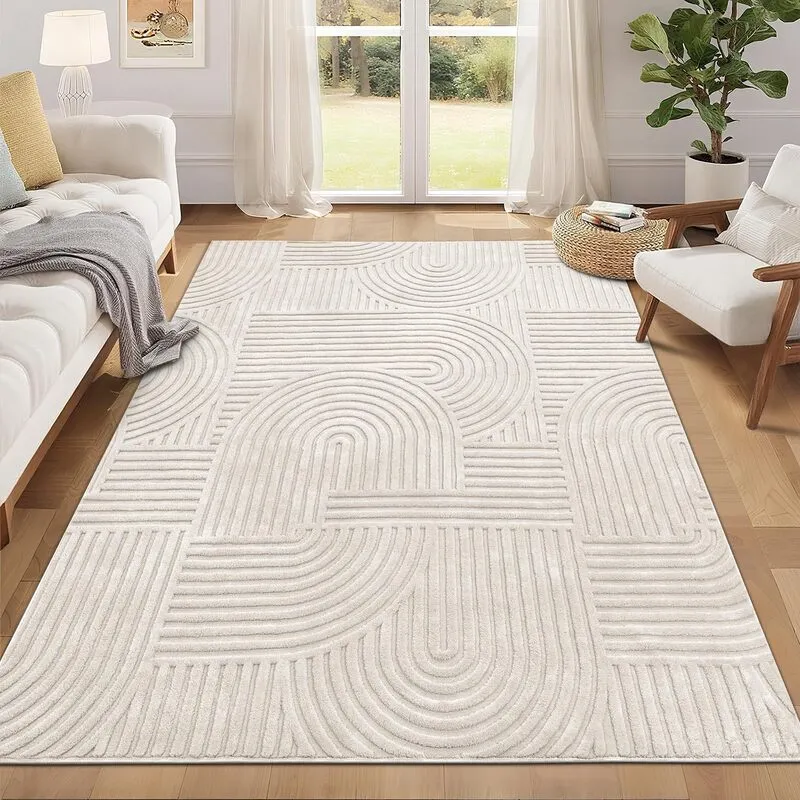
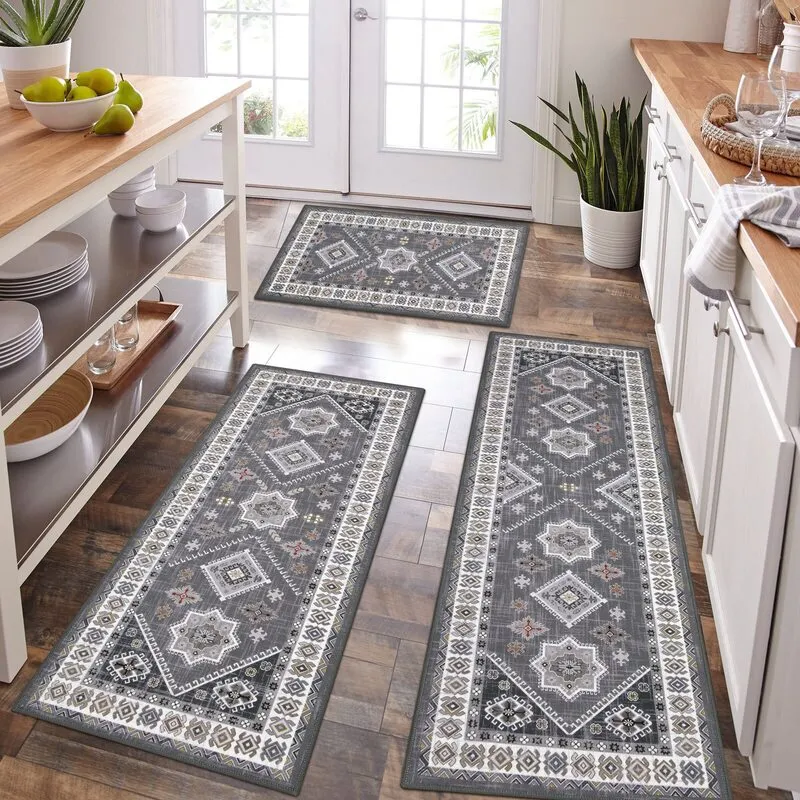
The back of a rug can be described as felt, fabric, latex or TPR, but those words do not tell you whether the finished item suits a particular floor. They may refer to a supporting layer, a coating or the surface that touches the floor.
Identify the complete reverse construction and check it against the actual flooring instructions. Start with the layer diagram, then use the material questions and floor-use record to compare the proposed rug and pad arrangement.
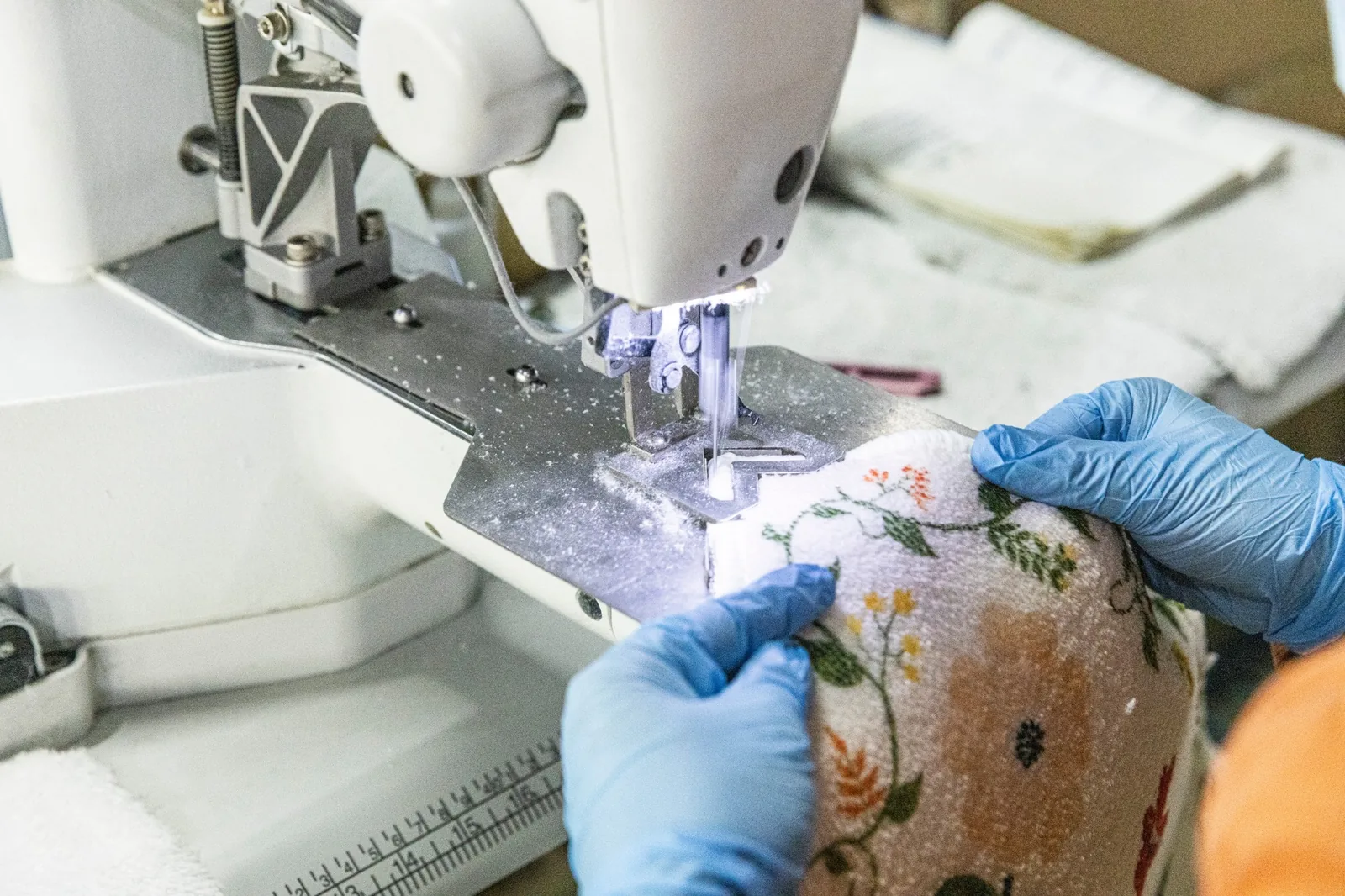
Separate the face, structural backing and floor-contact layer
The face is the visible surface. Structural backing or construction yarns help form and support the rug. A secondary layer or coating may serve another function, while a separate pad is an additional product placed beneath it. Not every rug uses all these layers.
CRI’s technical primer distinguishes primary and secondary backings and describes several construction-dependent backing systems. The useful lesson for a buyer is to ask for the selected construction, rather than treating every reverse layer as the same material. [1]
Request a reverse-side photograph and a written description for the exact sample. If the supplier uses an abbreviation, ask for the full material description and its role. Keep any coating or pad information beside the face specification so that a later substitution is visible.
Use material descriptions to ask better questions
| Description | What to clarify | What the name alone cannot prove |
|---|---|---|
| Woven or fabric reverse | Fiber or yarn composition, weave and any coating | Floor grip, cleaning method or absence of marking |
| Felt or nonwoven layer | Composition, thickness, attachment and need for a pad | That the rug can be machine washed or will not move |
| Latex or rubber description | Exact formulation or material description and floor-contact use | Compatibility with every vinyl, wood or other finish |
| TPR or other polymer coating | Full description, pattern, attachment and restrictions | Universal slip resistance or washing performance |
| Separate rug pad | Approved pairing, dimensions, floor suitability and care | That any pad suits any rug or heated floor |
This is a question framework, not a performance ranking. Two products described as “felt backing” can differ in composition and attachment. A generic “rubber backing” label can also hide distinctions that matter to the flooring manufacturer. Ask for a specific answer rather than assuming that a broad category is enough.
Avoid substituting one reverse material for another solely because the face looks the same. The change may affect thickness, packing, cleaning or the contact with the floor. Update the approved specification and review the affected conditions.
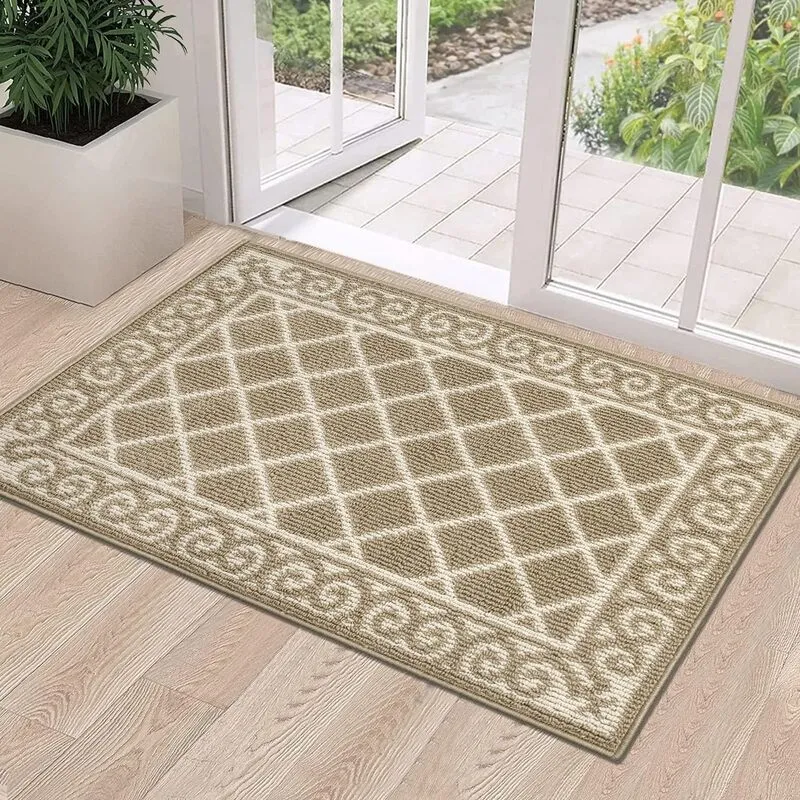
Check the flooring manufacturer’s instructions
Identify the actual floor product and finish: a generic note saying “hard floor” is not enough. Ask the project owner or flooring supplier about acceptable rug backings and pads, cleaning residues, moisture and any underfloor-heating conditions. Keep a written answer with the rug approval.
As one manufacturer-specific example, Karndean’s United States care guide recommends non-rubber-backed doorway mats for its floors. That does not create a universal rule for every floor or every rubber formulation. It shows why the selected floor’s current instructions matter. [2]
A short trial may be useful for initial selection, but it does not prove long-term compatibility. If discoloration, finish damage or a warranty condition matters, seek suitable evidence and approval for the actual pairing. Document the floor condition and intended cleaning routine as part of that discussion.
Assess movement and edges under the intended conditions
Review the full rug on the intended floor arrangement. Observe edge curl, local lifting, thickness at transitions and how the rug behaves when used as intended. A small backing swatch is not the same assessment as a full-size rug with finished corners.
If slip resistance is a requirement, ask which method, surface, condition and result support the claim. A statement such as “non-slip” without a defined basis cannot describe all dry, damp, dusty or recently cleaned conditions. Do not treat a textured reverse-side photograph as a test report.
For U.S. accessible areas, the Access Board’s floor-surface guidance addresses firmness, stability, slip resistance and secure carpeting. A loose rug needs project-specific assessment; backing terminology is not an accessibility certification. [3]
| Item | Record for the selected combination | Who should confirm |
|---|---|---|
| Floor identity | Manufacturer, product, finish and condition | Project or flooring representative |
| Rug reverse | Exact material and construction reference | Rug supplier |
| Pad, if used | Approved product and pairing | Relevant suppliers and project team |
| Use conditions | Location, traffic, transitions and cleaning routine | Owner or operations team |
| Evidence and decision | Applicable instructions, reports and unresolved limits | Responsible buyer or specifier |
For a hotel or another public-use project, coordinate these decisions with the responsible designer and applicable project requirements. A rug should not be selected in isolation from accessible routes, door movement and the surface around it.
Connect backing approval with care instructions
The reverse layer can be a limiting part of a care process. Ask whether the proposed method applies to the complete rug and whether it changes when a separate pad is used. Cleaning a face fiber successfully does not establish that the backing attachment is suitable for the same method.
Review the edges and reverse after any agreed sample-care assessment. Record visible changes, attachment concerns and residue without turning an informal observation into a durability rating. If formal performance is required, choose a relevant procedure and a report that matches the product.
For a structured starting point, use the Are Washable Rugs Actually Washable? What Buyers Should Check. Keep care and floor compatibility as related but separate decisions: one acceptable result does not establish the other.
Make the purchase order specific enough to preserve approval
Write the agreed reverse construction into the specification rather than using only “good backing” or “non-slip bottom.” Attach the reference image and sample ID, include any approved separate pad, and retain restrictions that matter to the intended floor.
Ask for notice before a backing substitution and identify which approvals would need review. If an unresolved floor question remains, mark it clearly before order release. The useful outcome is a documented pairing of rug, floor and care method, with a clear basis for the buying decision.
구매자 질문
Is TPR backing always non-slip?
A material abbreviation cannot establish grip on every surface. Request the exact product description and evidence for the intended floor, conditions and method.
Can rubber-backed rugs be used on vinyl floors?
Check the specific flooring manufacturer’s current guidance and the exact backing formulation. Some flooring instructions restrict rubber-backed mats; do not generalize one product’s guidance to every floor.
Does a rug pad replace the need to check backing?
No. The rug, pad and floor form a combined arrangement. Confirm the suitability and care of each part and the approved pairing.
출처
이 가이드에서 인용된 기술 참고 자료는 2026년 10월 21일에 확인되었습니다.