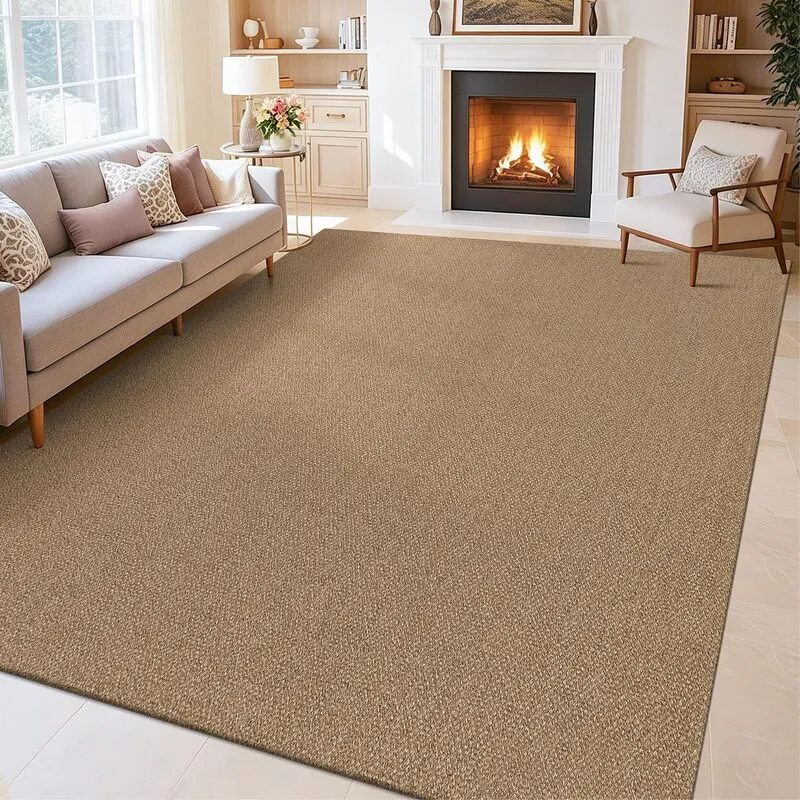
Adding another color can look like a small decision. Across four designs and three sizes, it can add twelve stock lines, each needing a quantity, a listing and a reorder decision.
When buying rugs for resale, give each item a role before allocating opening stock. Start with the customer and room needs you want to serve, then check the complete variant count. The example below shows how to distribute a trial order without pretending to forecast sales.
Choose the customer and the first use cases
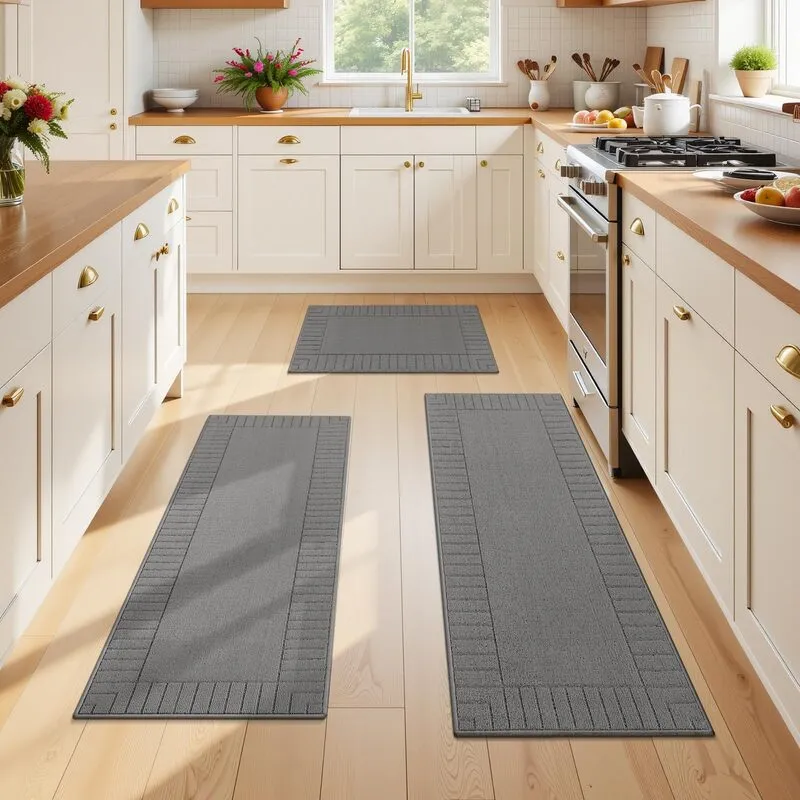
Describe the customer in practical terms: the rooms being furnished, typical layout constraints, preferred appearance and expected care process. Then choose the use cases your opening range should serve. “Rugs for everyone” does not tell a buyer whether to prioritize hallway runners, area rugs or coordinated kitchen sets.
For an online range, consider how customers will compare products on the listing page. For a physical store, consider display space and the ability to show a full-size piece. The channel affects the information and sample presentation you need; it does not establish demand by itself.
| Range role | Buyer question | Control against unnecessary expansion |
|---|---|---|
| Core use case | Which repeatable room or customer need does it serve? | Keep the core recognizable across sizes |
| Coordinated set | Why should these pieces be sold together? | Define every component and its dimensions |
| Design accent | What distinct aesthetic does it add? | Avoid several near-identical choices without a reason |
| Trial item | Which specific assumption are we testing? | Set a review date and a limited opening scope |
Do not turn every possible room into a product category on day one. Select a scope you can support with clear specifications, accurate imagery and a realistic replenishment discussion.
Map the range before choosing opening quantities
Use a matrix with one line per sellable variant. Record design, color, size or set format, intended customer use and price role. When two items occupy the same role, identify the reason both deserve a place. A different product photograph is not necessarily a distinct customer choice.
Count the full variant total before requesting a quotation. Four designs offered in three colors and three sizes create 36 variants if every combination is included. Reducing the options can improve the focus of a trial, but the supplier still needs to confirm the accepted quantity mix.
Separate a complete set from its components in your item master. GS1 addresses the identity of predefined assortments; changing a bundled item is a reason to review its identifier. Keep the sellable-unit definition consistent between buying, packaging and the retail listing. [1]
Allocate opening stock by role, not by habit
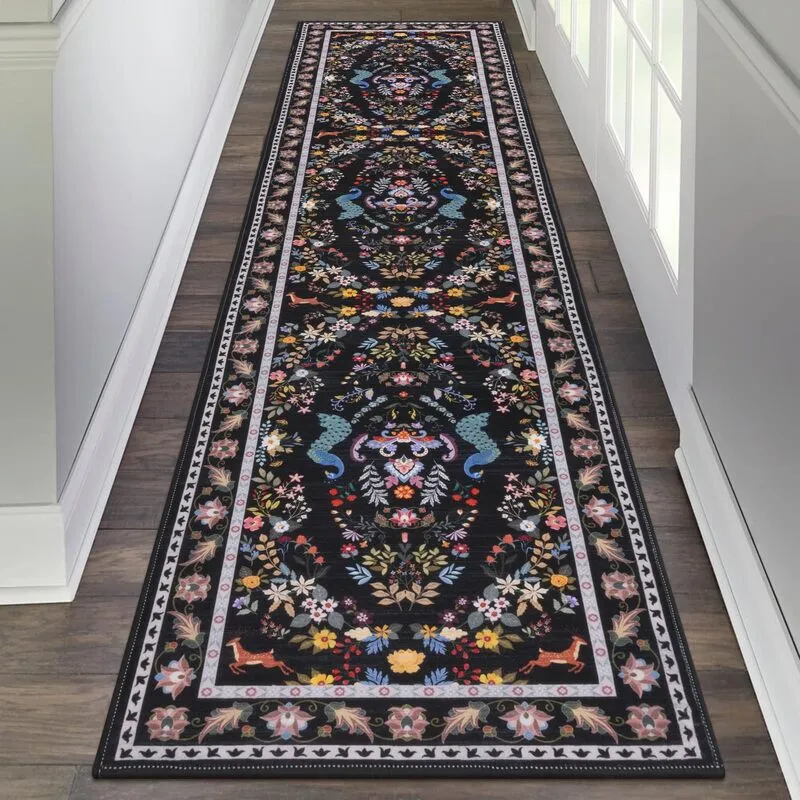
Invented example: a buyer has capacity for 300 sellable units and chooses 12 variants. The buyer allocates 180 units to six core variants, 80 units to four coordinated variants and 40 units to two trial variants. The figures illustrate allocation arithmetic; they are not a demand estimate, an MOQ or a recommended percentage split.
| Role | Variants | Units per variant | Total units |
|---|---|---|---|
| Core | 6 | 30 | 180 |
| Coordinated offer | 4 | 20 | 80 |
| Trial | 2 | 20 | 40 |
| Total | 12 | Varies by role | 300 |
An equal allocation would place 25 units into every variant. Neither approach is inherently correct. The useful step is making the reason for the allocation explicit, then checking the proposal against supplier minimums, budget and storage. If minimums require a much larger total, revisit the range rather than hiding the difference.
Keep units and cash exposure together. An opening plan of 300 units can have very different cash and space requirements depending on rug size, packing and unit cost. Ask for a comparable packing and quotation basis before committing the assortment.
Build the product information customers need to decide
Write a consistent listing structure for the range: finished size, material and construction, backing, included components, care instructions and accurate photographs. Do not use one care statement across products unless the supplier confirms that it applies to each selected construction.
Show scale and set contents clearly. A lifestyle photograph can help a customer imagine placement, while an isolated product view and a dimension diagram answer different questions. Keep decorative inspiration separate from evidence for performance claims such as washability or floor grip.
| Information | Check for every variant | Typical consequence of a mismatch |
|---|---|---|
| Abmessungen | Correct finished size and unit of measure | Customer chooses the wrong footprint |
| Set contents | Complete component list and images | A pictured piece is assumed to be included |
| Appearance | Correct color, pattern and version | Listing differs from the approved item |
| Care and floor use | Product-specific instructions and restrictions | Customer receives an unsuitable general claim |
| Item identity | SKU and approved barcode mapping | Order, listing and warehouse records diverge |
Use market reporting to ask questions, not to invent certainty
Floor Focus’s December 2025 area-rug reporting discusses fabricated and customized rugs in parts of flooring retail. It can prompt a buyer to examine custom options, but it does not establish demand for a particular store or justify a fixed stock allocation. [2]
For your own range, start with the evidence available: customer requests, comparable product inquiries and later actual sales or returns. Record what is known and what is still a hypothesis. When the range is new, a transparent trial assumption is more useful than a precise-looking forecast without a basis.
Do not copy a competitor’s catalog breadth as a default. Their customer base, buying history and fulfillment capabilities may differ. Use competitor content to identify questions customers need answered, then build your own product information and decision tools.
Set a review method before the range launches
Choose a review date and the signals that will influence the next order. Separate customer interest from completed sales, and separate a low stock level caused by a small opening quantity from strong ongoing demand. A stockout alone is not a complete success metric.
Review returns and questions by variant. Repeated size questions may point to unclear dimensions; care questions may point to missing instructions. An item that sells but creates costly confusion may need a listing change before a larger reorder.
Record whether each variant should be replenished, revised, held for more observation or removed. Keep supplier reorder terms visible when making that decision. Use the Mindestbestellmengen für Teppiche: Anzahl der Modelle, Größen und Sets to connect the retail plan to a feasible order schedule.
A focused assortment should become clearer as evidence accumulates. Expanding the range is a decision to support another customer need, with the product data, images and inventory commitment that the new choice requires.
Fragen des Käufers
How many rug designs should a new retailer launch?
There is no universal number. Start with defined use cases and a variant count you can support with stock, accurate product information and a clear review plan.
Should I order equal quantities of every rug size?
Only if there is a reason for that allocation. Record the expected role of each variant and compare it with accepted minimums and budget.
Can a competitor’s best-seller list predict my sales?
No. It can inform questions to investigate, but it does not establish demand for your own customer base or channel.
Quellen
Die in diesem Leitfaden zitierten technischen Quellen wurden am 21. Oktober 2026 überprüft.