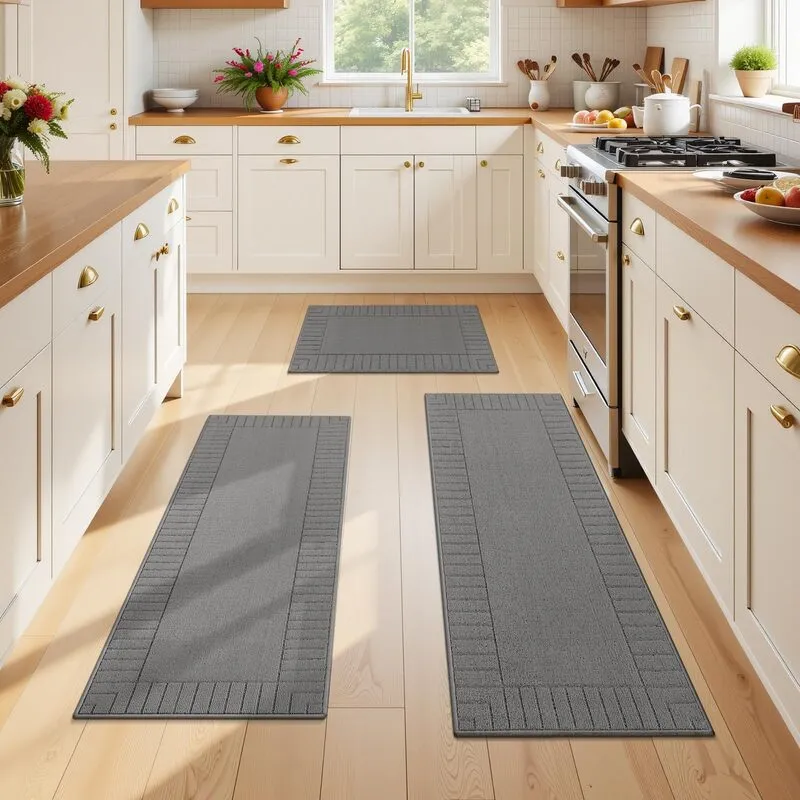
The packing list says 20 cartons. The order says 120 sets. The receiving team needs to know what will be inside each carton and how to recognize it without unwrapping the whole shipment.
Approve one packed sample before repeating the packing method across a wholesale order. Check protection and recovery after unpacking, then record the finished carton dimensions, contents and marks. Those details connect the approved rug to the shipment that arrives.
Choose the packing method for the actual rug
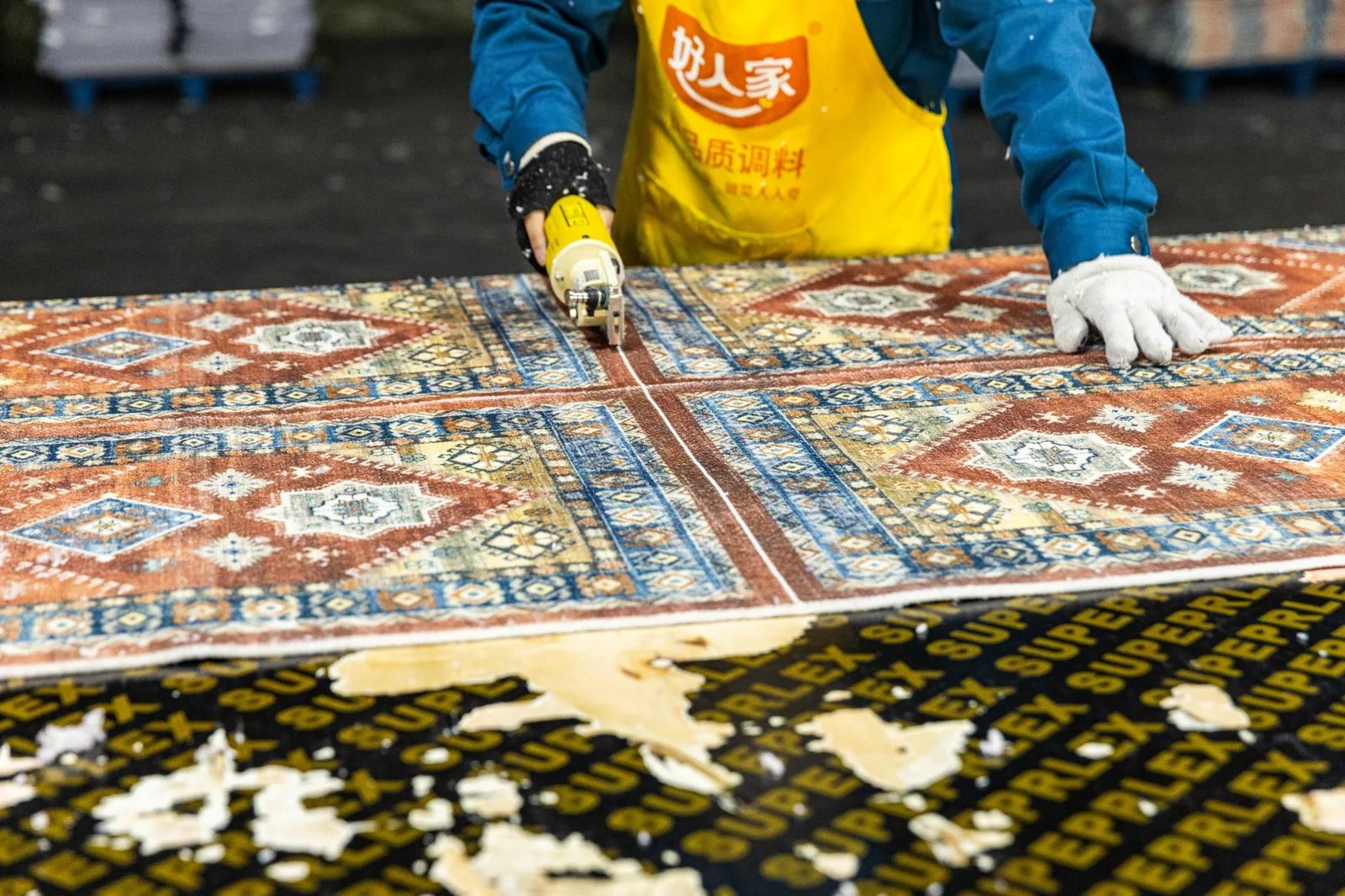
A rug that can be folded without an unacceptable result is not automatically suitable for every fold pattern or storage period. Likewise, a rolled rug still needs its ends, surface and outer wrapping considered. Ask for a packed sample using the proposed materials, then unpack it and review recovery under agreed conditions.
| Format | What to review | Approval evidence |
|---|---|---|
| Rolled | Core or support, roll diameter, end protection and outer wrap | Packed dimensions and an unpacked recovery review |
| Folded | Fold location, compression, package thickness and surface marking | Sample packed for an agreed period, then opened |
| Complete set | Correct component sizes, count and shared label | One opened sellable set and its approved component list |
| Project allocation | Room type, destination and receiving sequence | Carton marking matched to the room schedule |
For small rugs, FedEx describes rolling around a cardboard core as one packing approach. Its guide is a carrier example, not a guarantee for every rug, parcel or freight shipment. Confirm the method with the selected product and transport provider. [1]
Approve one complete sellable unit first
Start from what the end customer or project team should receive. Record whether the item is one rug, two coordinated mats or a three-piece set. Include the individual dimensions and the location of each component in the pack. A shared design name is not a component list.
Separate the rug label, retail sleeve and shipping carton artwork. They have different jobs. The rug label should match the product information and applicable destination rules; the retail pack explains the sellable item; the carton identifies its contents for handling. Barcode data must be assigned and checked by the responsible business, not improvised from a graphic placeholder.
GS1’s rules address changes to predefined assortments and to pack/case quantity. If either changes, review the relevant item identifiers instead of assuming all existing barcodes can remain. [2]
Measure the finished carton, not the loose rug
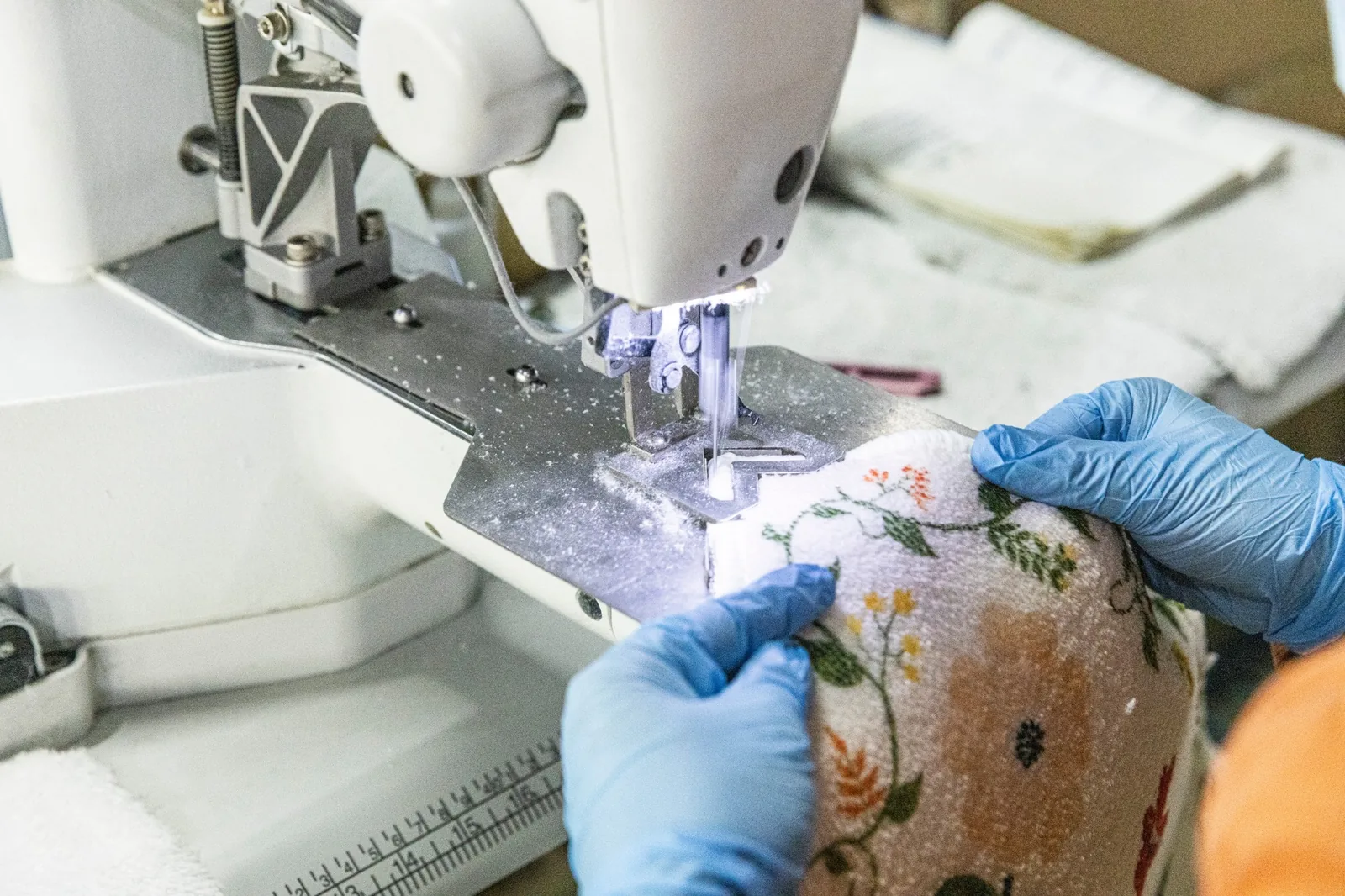
Record the external carton dimensions and gross weight after the agreed contents and protective materials are inside. A loose sample’s dimensions cannot establish the shipping carton size. Mark whether measurements are in centimeters or inches, and distinguish net product weight from gross packed weight.
Illustrative arithmetic: a carton measuring 62 × 42 × 32 cm has a geometric volume of 0.62 × 0.42 × 0.32 = 0.083328 m³. Twenty identical cartons total 1.66656 m³ before palletization or other handling allowances. These invented figures are a volume calculation, not a freight quotation or container-loading guarantee.
| Measure | Illustrative entry | Verifica |
|---|---|---|
| Sellable contents | 6 complete three-piece sets | Every component belongs to the approved set |
| Individual pieces | 18 pieces per carton | Do not mistake 18 pieces for 18 sets |
| External carton size | 62 × 42 × 32 cm | Measure after packing and state the unit |
| Carton volume | 0.083328 m³ | Length × width × height in meters |
| Gross weight | Measure and record | Include the carton and packing materials |
Transport providers can apply chargeable-weight rules, rounding, minimum charges and other fees. Request a quotation against the actual packed shipment and route. Use the same delivery boundary when comparing a compact folded pack with a longer rolled pack.
Use a pre-shipment evidence checklist
Ask for photographs that show the identification and the pack in a sequence: the finished rug, the complete set, the label, the protection, the carton contents and the closed carton marks. The purpose is to connect one approved item to its packed form. A collection of unrelated photos is weaker evidence than a consistent sample record.
| Checkpoint | Evidence to retain | Resolve before release |
|---|---|---|
| Item and version | SKU, design, size and packaging revision | Matches the current purchase order |
| Quantità | Opened carton and packing list | Pieces, sets and carton totals reconcile |
| Protection | Materials and packed sample photos | Sensitive edges, ends and surfaces addressed |
| Labels and codes | Readable artwork plus a scan result | Data matches the correct item and pack level |
| Segni sul cartone | Destination, item reference and handling details | Legible, correctly located and consistent |
| Recovery | Unpacked sample observations | Agreed appearance and shape after unpacking |
Retain the approval date and the file revision. If the pack changes after approval, ask which measurements, artwork and transport assumptions change with it. Recheck the affected items rather than treating the new pack as an invisible substitution.
Match transport testing to the distribution route
A wholesale sea-freight carton and a parcel sent individually to a consumer do not experience identical handling. Describe the expected route and ask a qualified packaging laboratory which test procedure fits it. Define what counts as product damage and unacceptable packaging damage before testing.
ISTA’s published 3A overview concerns individual packaged products for parcel delivery at 70 kg (150 lb) or less. It is an overview, not the full procedure or proof that a particular package has passed. A report should identify the tested pack, contents and results. [3]
Plan the receiving check before the shipment leaves
Agree how the receiving team will count cartons, identify mixed items and record any visible damage. Keep the packing list accessible and decide who will compare the first opened carton with the approved reference. For hotel deliveries, map cartons to room types without implying that one carton necessarily equals one room.
Record discrepancies with the item reference, carton number and clear photographs. Follow the agreed reporting process and the applicable carrier terms. A written receiving plan helps distinguish a missing component from a count-unit misunderstanding. For quantity planning before packing, see Quantità minime d'ordine per i tappeti: modelli, dimensioni e set.
Domande degli acquirenti
Should wholesale rugs be rolled or folded?
Use the format approved for the particular construction, storage period and route. Compare a packed sample, recovery after unpacking and the actual packed dimensions.
Can I calculate shipping volume from the rug dimensions?
No. Use the measured external dimensions of the packed carton or other shipping unit. Palletization and carrier charging rules need separate confirmation.
Does a packaging photograph prove transit performance?
No. Photos help verify contents and arrangement. Transport performance requires evidence appropriate to the selected package and distribution route.
Fonti
I riferimenti tecnici citati nella presente guida sono stati verificati il 21 ottobre 2026.