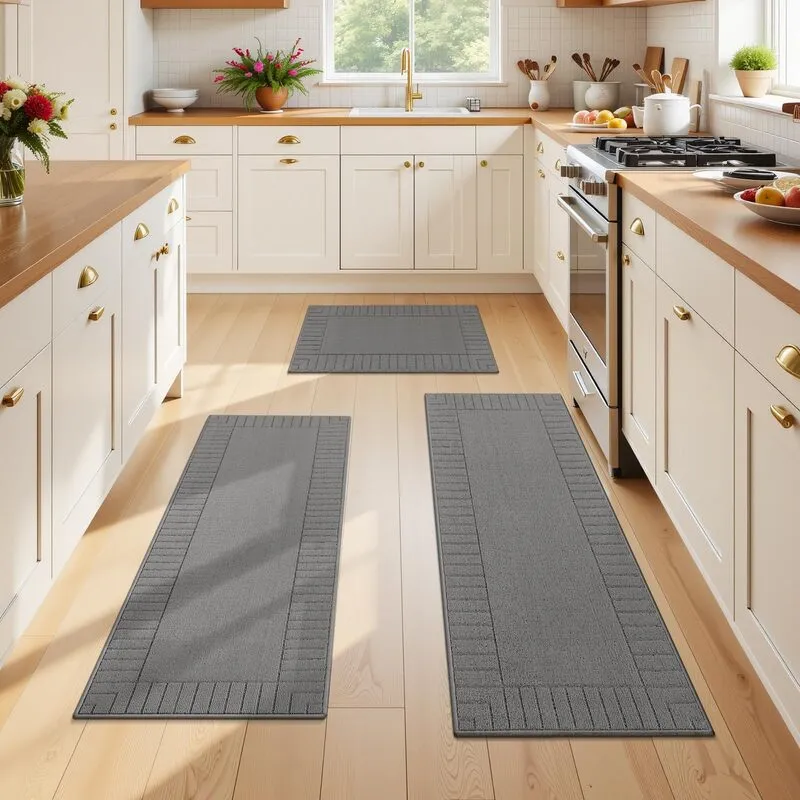
Two rug quotes can show the same size and color yet describe different products. One may include a different backing, an incomplete set or delivery only to a port. Comparing the unit prices at that point tells you very little.
Start a wholesale rug order with a written specification and a sample reference, then compare quantities, packing and delivery on the same basis. The worksheet and cost example below show what to put beside each quotation before choosing an offer.
1. Start with the buying decision, not just the design
Write down who will use the rugs, where they will be placed and how they will be maintained. For resale, identify the customer and selling format: individual area rugs, runners or complete mat sets. For a project, record each room type, the floor beneath the rug and the receiving location.
The table below is a planning framework, rather than a rating of any product. A retail or hospitality label alone does not establish suitability.
| Decision | Retail assortment | Hospitality or apartment project |
|---|---|---|
| Size mix | Sizes and set combinations that fit the intended sales format | Dimensions checked against room plans, furniture and door clearance |
| Product presentation | Labels, barcodes, package contents and consistent product information | Room identification, installation sequence and receiving labels |
| Maintenance | Clear, product-specific care instructions for the customer | Instructions compatible with the actual housekeeping process |
| Repeat orders | Replenishment quantities and continuity of selected designs | Replacement availability and acceptable variation between batches |
For a more focused discussion, see the HEBE RUGS pages for retail buyers and hotel procurement teams.
2. Ask for the whole specification
Two rugs with similar photographs can differ in surface construction, backing, edge finish and packing. A fiber name or total weight cannot answer all those questions. The Carpet and Rug Institute explains that construction, fiber and factors such as yarn twist and density affect carpet selection and performance. Its guidance is a useful technical starting point, rather than evidence that a particular loose rug meets a project’s requirements. [1]
| Field | Record or request | Resolve before approval |
|---|---|---|
| Product identity | SKU, design, color and reference image | Which version is being quoted? |
| Dimensions | Each finished size, unit of measurement and agreed tolerance | Does a set contain pieces with different dimensions? |
| Surface | Fiber composition, construction and any pile-height information | Is a weight figure face weight or total product weight? |
| Backing | Material description and intended floor conditions | What evidence supports any grip or floor-compatibility claim? |
| Edges and corners | Binding or stitching, corner finish and design placement | Does the approval sample show the finished edge? |
| Care | Product-specific cleaning and drying instructions | If washable, what method and equipment limits apply? |
| Presentation | Pieces per set, labels, package artwork and carton contents | Are quantities stated in pieces or complete sets? |
| Evidence | Requested test reports or documents for the selected product | Do the scope and product reference match this order? |
Keep descriptive terms separate from verified performance. “Washable,” “non-slip” and “commercial” need a product-specific explanation; none supplies every condition under which the rug can be used.
3. Turn a sample review into a record
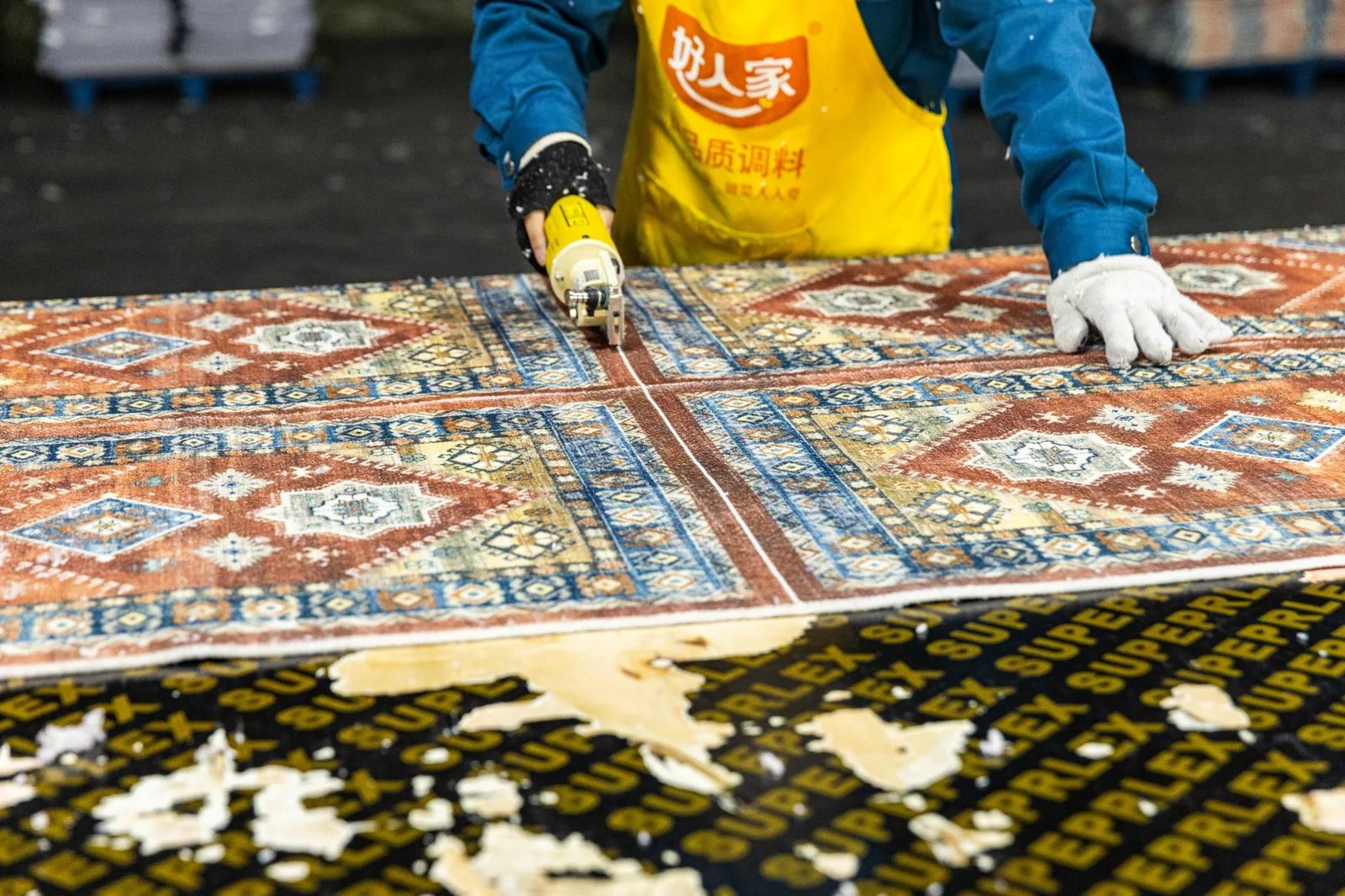
Compare the sample under the lighting in which it will be selected or used. Check the face, reverse, finished edges and corners. Record the sample reference and date, the dimensions checked and any changes requested. If a later sample replaces it, identify the new version explicitly.
For a washable product, agree a review protocol before testing: the stated wash method, drying method, number of cycles and what will be measured. Record dimensions before and after, backing condition, edge appearance and visible color changes. A buyer’s sample review is useful purchasing evidence; it does not replace an applicable laboratory test or prove the performance of every production unit.
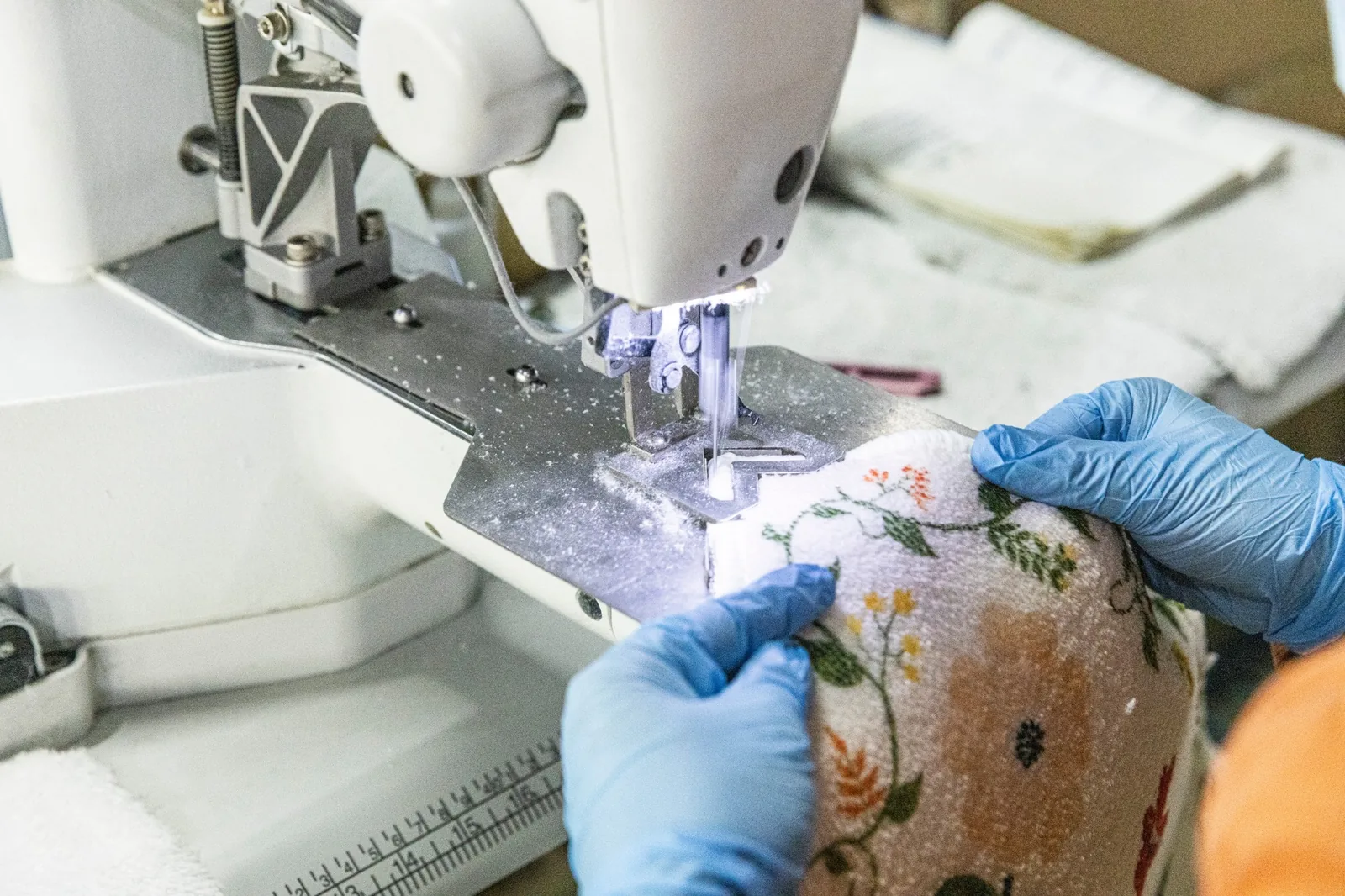
A useful approval note names the exact issue: “confirm binding color against sample R2” is easier to act on than “make it more premium.” Attach the final record to the purchase order or specification instead of leaving decisions scattered across messages.
4. Separate the order total from variant minimums
Ask whether the minimum applies to the whole order, each construction, each design, each color or each size. An order of 500 pieces across ten variants is different from 500 pieces of one variant. For mat sets, state both the number of sets and every included piece.
Also separate standard assortment questions from development questions. A custom size, print, backing, label or package may change the review and quotation. HEBE RUGS discusses minimums and sample arrangements against the selected product and brief; this guide does not set a universal MOQ, sample price or lead time. See custom rugs and private-label development for the information to prepare.
5. Match documents to the destination and intended use
For U.S. purchases, the Consumer Product Safety Commission describes carpet and rug surface-flammability standards under 16 CFR parts 1630 and 1631. The applicable requirements depend on the product, including its size. Ask the responsible supplier or importer to identify the relevant requirements and documentation for the selected SKU and intended user. [2]
The CPSC’s carpet and rug FAQ provides a concrete technical reference: the surface-flammability acceptance criterion requires at least 7 of 8 replicate specimens to meet the individual specimen criterion. This is a specific fire-test criterion, not a general durability score or a claim that HEBE RUGS products have passed it. When reviewing a relevant report, check the method, specimen results and product identification together. [5]
These U.S. references do not establish the rules for another destination. Provide the delivery country and any retailer or project requirements before confirming the order. A logo, a general factory certificate or a report for a different construction does not establish that the selected rug meets a particular requirement. Check the named product, test method, result, issuing organization and scope of the document.
Buying bath rugs wholesale: approve the complete set
A bathroom range needs a more precise brief than “soft, absorbent and non-slip.” Start with the pieces being sold together, their finished dimensions, the floor beneath them and the care instructions for each size. Compare the complete sample set with the listing and packed unit.
| Buying question | What to record | Approval check |
|---|---|---|
| What is one sellable unit? | Single mat, two-piece set or another specified combination | Count each component; do not compare a set price with a piece price. |
| Will the sizes fit? | Each finished size, door movement and intended placement | Use the measured bathroom layout; a catalog size label is insufficient. |
| What supports the backing claim? | Backing description, intended floor conditions and relevant product evidence | Keep grip and floor compatibility separate. Neither follows from a photograph. |
| How will the complete mat be cleaned? | Product-specific washing, drying and equipment limits | Check the face, backing, edges and dimensions after the agreed sample-care review. |
| Will the order arrive ready for resale? | Set contents, labels, barcode assignment and carton quantities | Match the approved artwork and packed sample to the purchase order. |
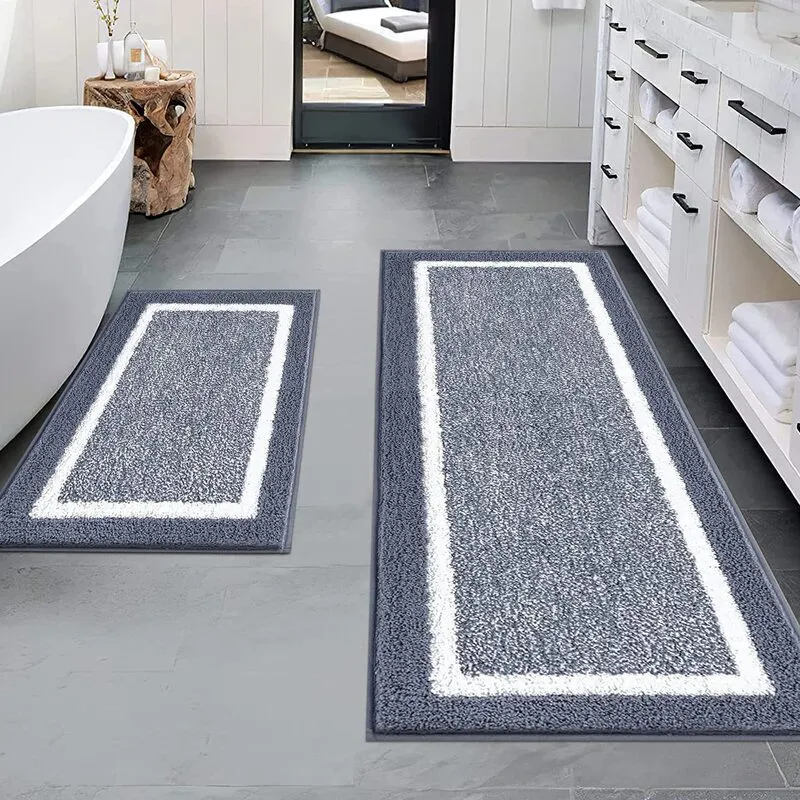
Browse the wholesale bathroom rug collection to identify the products you want to compare, then ask for the corresponding specification and sample. For face-fiber questions, use the polypropylene and polyester rug comparison; the finished backing and care method still need their own review.
6. Compare quotes using one cost boundary
Before choosing the lowest unit price, align the SKU, specification, quantity, packaging and delivery scope. ICC’s Incoterms® rules define important buyer and seller responsibilities and allocate relevant transport costs and risks. Record the chosen rule, named place and edition, and clarify any quotation exclusions. [3]
Illustrative example only: the following invented numbers demonstrate arithmetic for 200 identical rugs. They are not HEBE RUGS prices, freight quotations, duty rates or market averages. Both options use the same assumed delivery scope and product specification.
| Cost item | Option A | Option B |
|---|---|---|
| Quantity | 200 rugs | 200 rugs |
| Unit product price | $18.00 | $19.20 |
| Goods subtotal | $3,600 | $3,840 |
| Freight and logistics assumption | $900 | $600 |
| Other included charges | $150 | $150 |
| Listed subtotal | $4,650 | $4,590 |
| Listed subtotal per rug | $23.25 | $22.95 |
In this example, Option B has a higher product price but a $60 lower listed subtotal. Duties, taxes, brokerage, insurance and every other unlisted fee are excluded from both columns; this is not a complete landed-cost calculation. For a real purchase, add all applicable costs to the same receiving point and distinguish recoverable taxes where relevant.
Then review non-price differences separately: confirmed product information, sample approval, delivery milestones, replacement arrangements and written handling of discrepancies. An inexpensive quotation with an unresolved backing or size specification is not yet comparable.
7. Choose a stock or custom route for a specific reason
Stock selections and custom development solve different buying problems. A standard assortment may suit a repeatable retail range; a project may need a particular format, palette or presentation. Floor Focus’s December 2025 area-rug report describes a shift toward fabricated, customized rugs within parts of the flooring retail channel. That reporting provides context, rather than a universal demand statistic or a guarantee of custom-order economics. [4]
Ask which changes matter to the buying brief and what each change means for samples, quantities, packaging and schedule. Confirm those details in writing instead of assuming that “custom” always means a better fit or a faster result.
A wholesale rug inquiry you can copy
Subject: Rug inquiry — product references — destination
We are buying for retail / distribution / hotel / apartment project. Our intended use and floor conditions are details. Please review:
- Product links, design and color references: list
- Finished sizes and quantities per variant: list; state pieces or complete sets
- Required construction, backing and edge details: known requirements
- Care method and any testing or documentation requested: details
- Labels, package contents and carton requirements: details
- Destination and desired receiving date: country, city and date
- Sample scope and approval process: request
- Quotation currency, delivery rule, named place and exclusions: request
Please identify unresolved items and confirm the applicable minimums, sample arrangements and proposed milestones for this brief.
Buyer questions
What information should I send before asking for wholesale rug pricing?
Send product references, finished sizes, quantities per variant, intended use and destination. Add the care, packing, labeling and documentation requirements you already know. State whether the quantity means individual pieces or complete sets.
Does a higher rug weight mean better quality?
Weight is one specification, and the figure may describe the face or the whole product. Compare construction, dimensions, backing, finish and the evidence relevant to the intended use before treating weight as a quality measure.
Can I compare two offers without seeing samples?
You can compare documented terms and identify missing information, but photographs alone leave appearance and construction questions unresolved. Agree what sample or other evidence is needed before approving the selected product.
Is there one MOQ for every wholesale rug order?
Ask how the quoted minimum is calculated for the selected construction and variant mix. Confirm whether it applies per order, design, color, size or packaging version. Do not apply one product’s minimum to another.
How should I plan the delivery date?
Work back from the receiving date and separate artwork, sample approval, production, transport and receiving milestones. Request a product-specific schedule; a production estimate alone is not a confirmed arrival date.
Sources and scope
This article combines a buyer-planning framework with the sources below. The cost comparison is an original worked example, not research data. Sources were checked on October 21, 2026. Product-specific suitability, documents and commercial terms must be confirmed for the selected order.
- The Carpet and Rug Institute, Selecting the Right Carpet. Technical background on construction and fiber; it does not certify an individual rug.
- U.S. Consumer Product Safety Commission, Flammable Fabrics Act — Carpets and Rugs. U.S. regulatory reference.
- International Chamber of Commerce, Incoterms® 2020. Official background on trade rules.
- Jessica Chevalier, Floor Focus / FloorDaily, 2025 Area Rug Update, December 2025. Industry reporting; observations relate to the market segments discussed.
- U.S. Consumer Product Safety Commission, Carpets and Rugs FAQ, section on the test and acceptance criteria.